
Hi, I’m Zhengyang, and you can also call me Zayne.
My research focuses on Human-Centered AI and Human-AI Interaction. I am interested in designing intelligent interactive systems that understand human states and intent — especially through physiological and behavioral signals — and adapt to support human thinking and action.
Here is my CV.
Projects
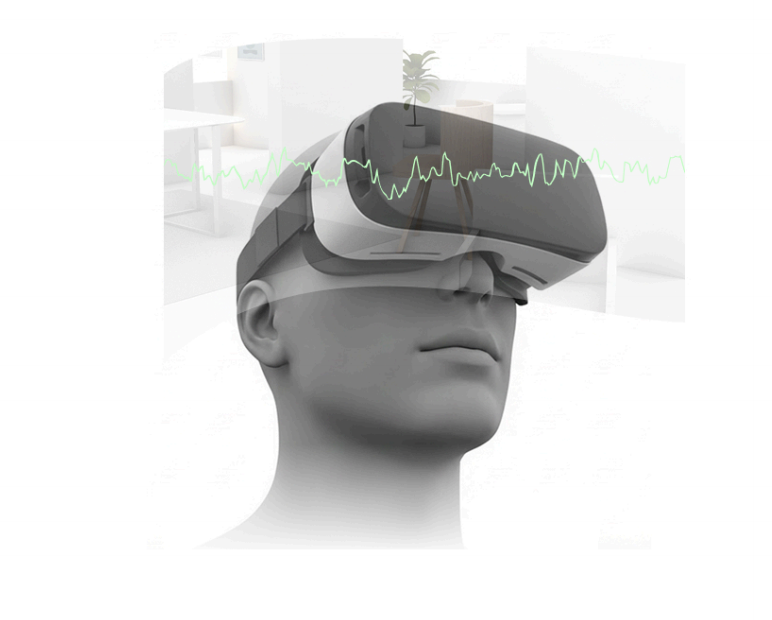
Cognitive Load-Driven Adaptive VR Space (Mind-Adaptive Space)
Zhengyang Li*, Hailing Deng
An EEG-driven VR system that dynamically reshapes environments based on users' cognitive load. It senses brain activity, models mental states, and adjusts spatial parameters (layout, scale, visual complexity) to support focus and memory. Unlike static VR, it treats space as a responsive medium evolving with cognition. Through neurofeedback and data-driven adaptation, it explores personalized virtual spaces for regulating cognitive load and boosting attention—demonstrating brain-responsive environments as a new design paradigm for immersive learning and cognitive support in VR.
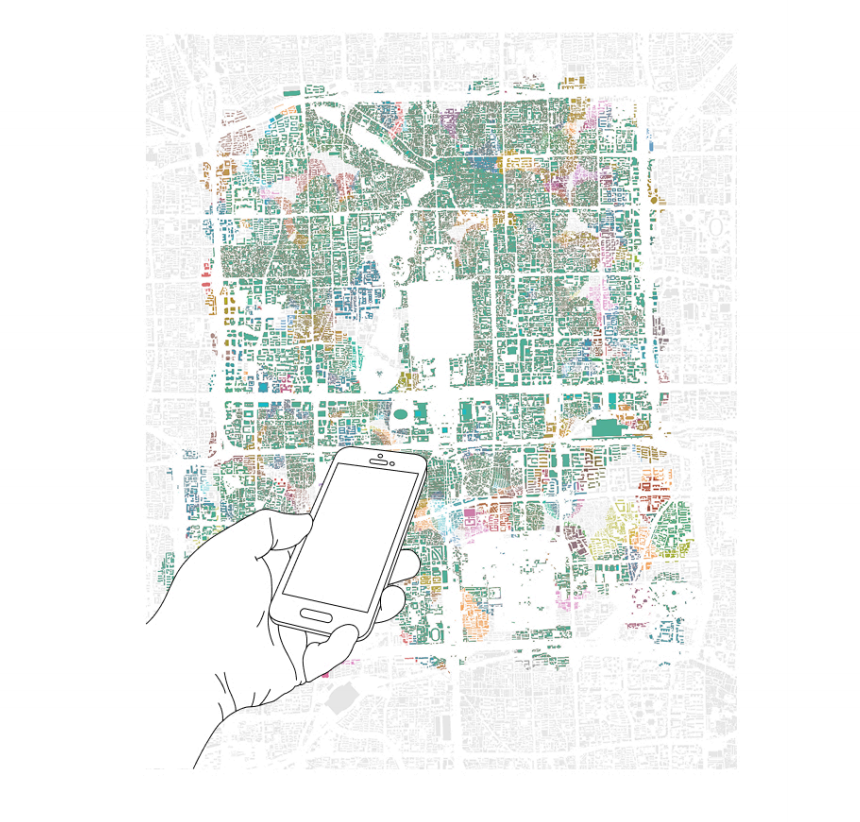
Seasonal Perception and Sentiment in Urban Scenes: A Multimodal Time-Series Study Using Social Media Data
Yan Lan, Jinghan Liu, Zhengyang Li*, Han Tu
Street view data aids urban visual assessment but lacks temporal resolution, impeding dynamic human perception research. We propose a dual-path multimodal framework using social media to analyze seasonal urban perception, and via deep learning, YOLO and SNLP, we analyzed scene classifications and object-sentiment correlations in Beijing’s Second Ring Road. Results show natural scenes vary seasonally while architectural/cultural ones are stable; vegetation/buildings drive consistent positive sentiment, with other elements showing seasonal emotional fluctuations. This validates social media’s potential for dynamic urban perception analysis.
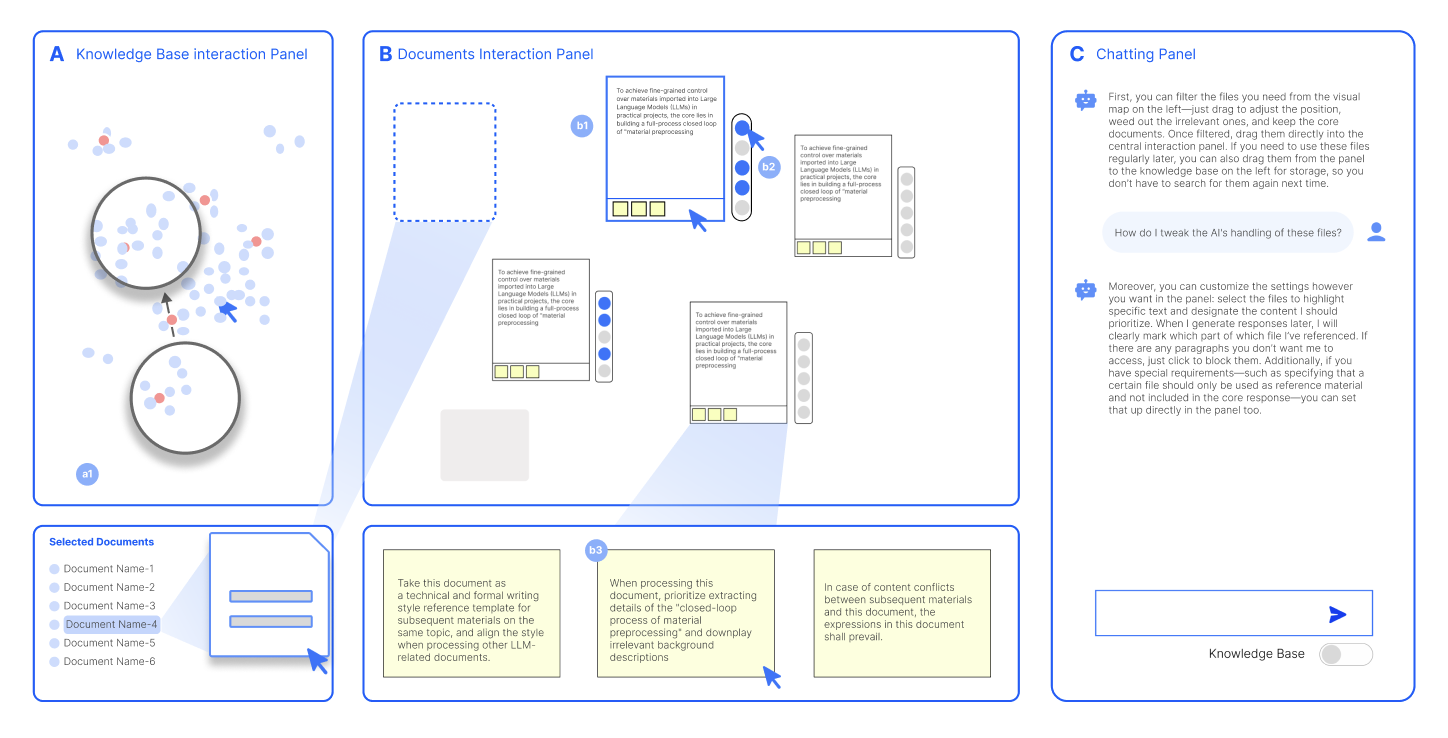
DocLens: A Visualization System for Multi-Document Operations and Knowledge Base Retrieval in LLMs
Zhengyang Li*
LLMs are widely used in document tasks, but current LLM-assisted tools lack transparency and fine-grained control over content retrieval and utilization. We present DocLens, a visual interactive system for LLM multi-document operations and knowledge base retrieval. It features a map-based interface for intuitive document filtering, plus a multifunctional panel with text highlighting, real-time LLM content visualization, customizable rules, and seamless knowledge base integration for persistent storage.
TextScape: An Interactive Visualization System for Exploring Complex Literary Texts
Zhengyang Li*, Wenyan Xie, Zhenzhen Guo
TextScape is an interactive visualization system for exploring complex literary texts through multiple structural views. It transforms characters, locations, and sentence-level relationships into visual maps that help readers trace narrative patterns, compare chapters, and make sense of dense storylines. By combining text analysis, network visualization, and spatial mapping, the system supports a more exploratory way to understand long-form literature.
_14.png)
Art & Design
I started as an art student — drawing, photography, experimental film, and architecture. Selected works from along the way.
See selected works →Connect
Feel free to contact me at lzyqwe2500@outlook.com